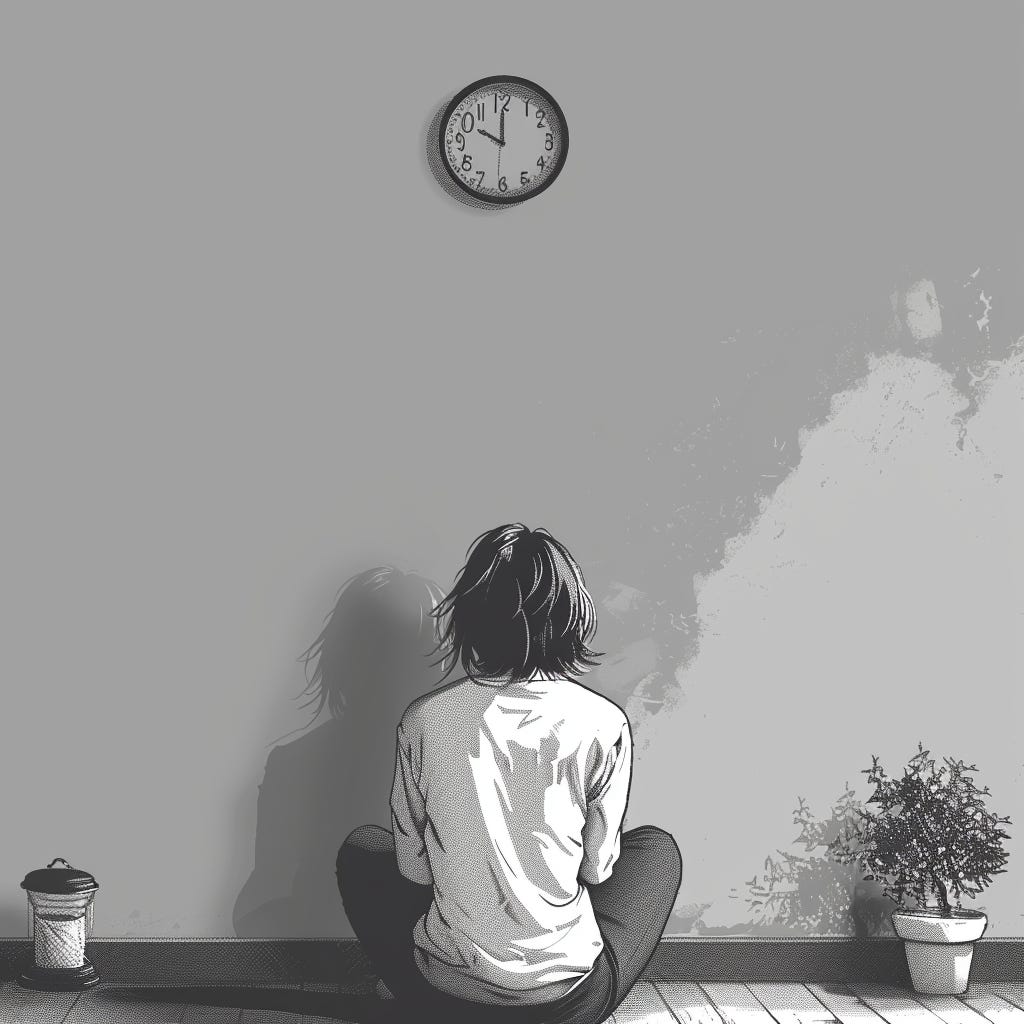
Whenever you have things to do—tasks that are not necessarily aligned with that life goal we talked about yesterday—but simply things that must be done, the temptation to get distracted is overwhelmingly strong until the moment when there's no more time left. But what happens if we don't do them? Does anything really change? What changes? Maybe it's what others think, but if it's only what others think, then it isn't important because those others aren't us. But if we judge ourselves and feel guilty, then it's not okay.
When you feel guilty and know you're wrong, you know you need to do something about it. Then you are your own judge, your own executioner. There's something sinister about this mechanism that makes you aware of the fault but at the same time makes it seem unimportant—and if it doesn't matter, then perhaps it's okay as it is. But you know deep down it's not okay, so maybe there's a sadistic pleasure in self-harm. Torturing ourselves with guilt and then blaming external factors. It’s the fault of others, of fate, of distractions.
But what is important? Getting up early, working out, taking care of your physical appearance, eating well, doing a job that doesn’t suck just to pay the bills, spending money, investing money, traveling, making love, reading, writing, listening to music, playing an instrument, going to the cinema, and then being with other people because being alone is not good. Loners don't do well; they become myths because it's odd, but is it really that strange? They are simply honest and consistent with the selfishness that distinguishes us because, in the end, we don’t do things for others; we do them for ourselves. So why procrastinate? Maybe just to sit still, think about these things, write them down, and not do the other things, those that are supposed to be important.